HVAC Rebates, Codes & Industry Resources

  • Free Initial Consultation
    X

    Informed Decisions

    No two projects are identical, so we don't offer a preset price quote. If a quote doesn't change based on your actual plans, it's worth asking what happens once your project turns out to need more time than that quote assumed. Every project gets a preliminary plan evaluation before your consultation, to confirm the architecture has room for a proper, real-world duct and airflow layout. Your free consultation is a chance to walk through your project, ask questions, and find out exactly what we'll need from you to get started.

    To Set Up an Appointment

  • Areas Served
    X

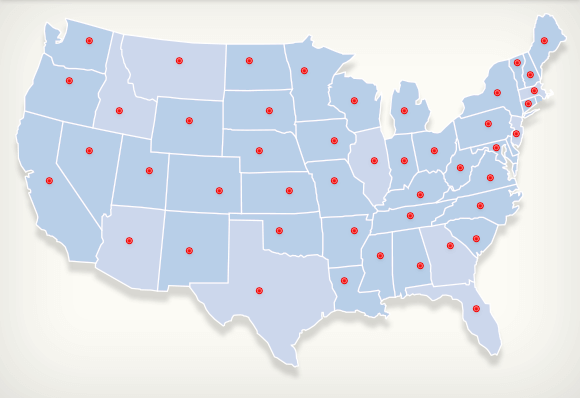
    Our Services Are Available in all 50 States

    map
  • Reviews
    X

    What Our Customers Say

    I knew I needed new ductwork and that I would need to buy a new unit in the next few years. To avoid getting swindled, I decided to get unbiased information from a consultant who would not be selling me equipment. David Brown and ConsultAir came highly recommended and I have not been disappointed. David created Manual J, S and D reports and a duct system layout, with quick replies that include thorough and easy-to-understand answers. As I gathered my first quotes from HVAC contractors, I got pushback on using a consultant’s drawings – some refused, others offered elaborate sales routines and scare tactics to persuade me to use their own drawings and equipment instead. I contacted David with questions about what I was experiencing, and he confirmed my suspicions about one contractor and offered additional guidance so I felt fully armed going into additional quotes.

    SM Axland – via Google Review

    If you are thinking of doing any kind of heating or cooling in your home don’t take a chance by trusting the local HVAC person. They have one agenda… To sell you an overpriced system and get the job done as quickly as possible. I learned this because I had 5 different bids and 5 different sized systems from each installer. How could this be I wondered? Well…it turns out that there is a real, systemic, and calculated way of finding out how big of a system you need for your home. There are manuals and load calculations that can be done to properly size your system. After much searching on Google I stumbled upon David Brown and ConsultAir. He was the person I was searching for. He did all the load calculations, the calculations for the ductwork and even offered some very helpful tips along the way. David should be your first call when looking to install a system. I cannot recommend him highly enough. Thanks David!!!

    Timothy McNeely – Bakersfield, California

    So, I'll start by saying I almost never write reviews. I know I know... it's a good, neighborly thing to do but for whatever reason, I don't ever seem to get around to it. That said, with respect to David and ConsultAir, it's more than warranted. Plainly put, if I could somehow magically reach out to anyone dealing with HVAC issues, I'd tell them this... he is one of the nicest, most helpful, most KNOWLEDGEABLE people I've ever met. And, at this point, the thought of installing or overhauling any HVAC system without his input seems ridiculous to me. My wife and I contacted David after (and here comes the all-too-common contractor story) our HVAC contractor installed a system in our house that was more than twice as big as it should have been. Three units powering different zones of the house, all oversized, that led to freezing up and leaking into our ceilings, jet-like air delivery from the vents, wildly varying hot/cold spots, etc. At David's direction, we took detailed measurements and gave him an overview of what we needed. From minute one, he took an academic approach to our needs the original contractor SHOULD have... calculating the proper loads room by room, studying the layout/functionality of our existing system, and ultimately, reconfiguring/designing a system that worked efficiently. That last point is the most important... for having gone through a full remodel of our house, we've learned that designing a NEW system that works well (any type... HVAC, plumbing, etc.) is hard enough. Reconfiguring an EXISTING system to maximize its potential with the lowest additional cost... that's truly a step above. Because you're working with something that, oftentimes, is less-than-perfect to begin with. And, in our case... far from it. So, to wrap up what, at this point, has become a novel... we can't recommend David and ConsultAir highly enough. He saw us through a difficult situation in a way we've rarely encountered elsewhere, and if you're considering any sort of HVAC install... TALK TO HIM FIRST. You won't regret it.

    Gavin M. – Kingston Springs, Tennessee

ENERGY STAR

Search current rebates and tax credits for energy-efficient upgrades, by zip code.

Visit Site
DSIRE (Database of State Incentives for Renewables & Efficiency)

A searchable database covering every state and utility rebate or incentive program in the U.S.

Visit Site
ENERGY STAR

Federal Tax Credits: a plain-language breakdown of current federal tax credits for energy-efficient home upgrades.

Visit Site
DOE (U.S. Department of Energy)

Home Upgrades: the federal government’s official guide to home energy upgrades, including heat pumps and how to claim credits.

Visit Site
NAHB (National Association of Home Builders)

Consumer Resources: general guidance for homeowners on choosing a builder and understanding the construction process.

Visit Site
AHRI (Air-Conditioning, Heating & Refrigeration Institute)

Directory: look up the certified efficiency rating of any HVAC system before you buy.

Visit Site
NAHB (National Association of Home Builders)

The leading trade association for builders, including codes advocacy and technical resources.

Visit Site
ICC (International Code Council)

The organization that publishes the model building codes referenced throughout the industry.

Visit Site
DOE (U.S. Department of Energy)

Building America Solution Center: federally funded, technical best-practice guides on ventilation, building envelope, and mechanical systems.

Visit Site
RESNET (Residential Energy Services Network)

The organization behind HERS ratings, relevant for coordinating energy code compliance on new builds.

Visit Site
NAHB (National Association of Home Builders)

TechNotes: specific technical guidance on ventilation, insulation, and moisture control in new construction.

Visit Site
ENERGY STAR

New Homes Program: a certification program some builders use to market high-performance new construction.

Visit Site
ACCA (Air Conditioning Contractors of America)

The source of the Manual J, S, and D standards this site is built around.

Visit Site
AHRI (Air-Conditioning, Heating & Refrigeration Institute)

Verify manufacturer-rated performance data for HVAC equipment.

Visit Site
ICC (International Code Council)

The source of the model codes referenced in HVAC installation compliance.

Visit Site
ASHRAE (American Society of Heating, Refrigerating and Air-Conditioning Engineers)

A technical, engineering-focused standards organization for HVAC design.

Visit Site
EPA (U.S. Environmental Protection Agency)

Section 608 & Refrigerant Transition: federal guidance on refrigerant handling and the ongoing shift to A2L refrigerants.

Visit Site
SMACNA (Sheet Metal and Air Conditioning Contractors’ National Association)

The standards body behind proper duct fabrication and installation practices.

Visit Site
RSES (Refrigeration Service Engineers Society)

A nonprofit training and certification body for HVACR technicians.

Visit Site
NATE (North American Technician Excellence)

The leading HVAC technician certification body in the industry.

Visit Site